

3 min read
Why are stock markets falling?
Stock markets have fallen as investors respond to the US mid-term election results and concerns about inflation and interest rates.
The Democrats’ strong election result has raised questions about tighter rules for technology and artificial intelligence companies. Falls in these businesses’ share prices have helped pull US markets lower, with other markets also affected.
The Nasdaq, which includes many technology companies, has entered a “correction” – meaning it has fallen by at least 10% from a recent high.
What’s happening with interest rates?
The Bank of England has raised its main interest rate from 3.75% to 4% to help control inflation – the rate at which prices rise.
Higher energy costs remain a concern. Further rate rises may be needed if the conflict involving Iran keeps energy prices high, although more increases are not inevitable.
Higher interest rates can make borrowing more expensive for households and businesses, which can also affect company profits and share prices.
How does this fit into the bigger picture?
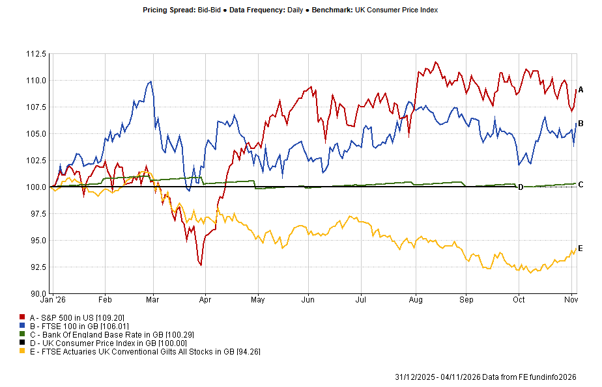
Despite recent turbulence, the main stock markets shown in the accompanying chart were still above their start-of-year levels as of the 4th November. Their gains had also outpaced inflation up to that point. The chart does not include subsequent market movements.
Markets react quickly to political and economic news, and further swings remain possible. For long-term investors, the key considerations remain their investment goals, when they will need their money and how much risk they can afford and feel comfortable taking.
We remain confident in clients continuing to invest and in the Investment Managers we have recommended to our clients, who are chosen carefully in part for how they have weathered difficult conditions.
What could this mean for the property market?
Higher interest rates can make mortgages more expensive, reducing what buyers can afford. Alongside rising household bills and economic uncertainty, this could lead to fewer buyers, longer selling times and pressure on house prices. However, prices will also depend on local demand and the number of homes available.
For existing homeowners, the impact depends on their mortgage. Those on a tracker or variable rate may see repayments rise, while those on a fixed rate will keep their current rate until their deal ends.
New fixed-rate deals do not automatically rise in line with the Bank of England’s rate, since usually lenders will have priced in expected rises already into deals available.
For buyers, a quieter market could offer more room to negotiate, but any saving on the purchase price needs to be weighed against the cost of the mortgage.
The value of investments can fall as well as rise, and you may get back less than you invested. This post provides general information and is not a personal investment recommendation. Our analysis chart is adjusted for CPI on a year-to-date basis. The potential effect on house prices is an outlook, rather than a prediction. You should speak to an adviser before acting on any of the content of this article.
Let’s talk about what this means for you
If you have questions about how changing markets or interest rates could affect your investments or mortgage, speak to our team at All Aspects Financial.
Call 0330 390 5700 or email enquiries@allaspectsfinancial.co.uk to discuss your circumstances and plans.
